




Carbide 600
Carbide 600
Turn Your Pressure Washer Into a Professional Wet Sandblasting System
The Carbide 600 is the whole system rebuilt from the ground up: a wider internal mixing chamber for better vacuum pull, a nozzle engineered to handle sustained pressure without wearing out, and gravity-fed delivery that runs smooth from the first bag to the last. Connect it. Hang it. Strip any surface. Your pressure washer already has the power even a small one. Gravity drops the media, the sleeve valve meters it the air inlet pushes it. Your washer only needs a little pull to get a perfect, steady feed. That's why this works on a $150.00 electric washer or a 10,000 PSI commercial rig. No sputtering, no clogs, no shaking a bucket. Engineered in the USA.
Choose Your Bundle
Don't Miss These Essentials

Carbide 600








Built Different
Turn Your Pressure Washer Into a Professional Wet Sandblasting System
The Carbide 600 is built for bigger jobs, faster surface coverage, and serious rust, paint, and coating removal — no air compressor needed. Just water force from the pressure washer you already own, abrasive media pulled into the stream, and a nozzle bore wide enough to actually move.

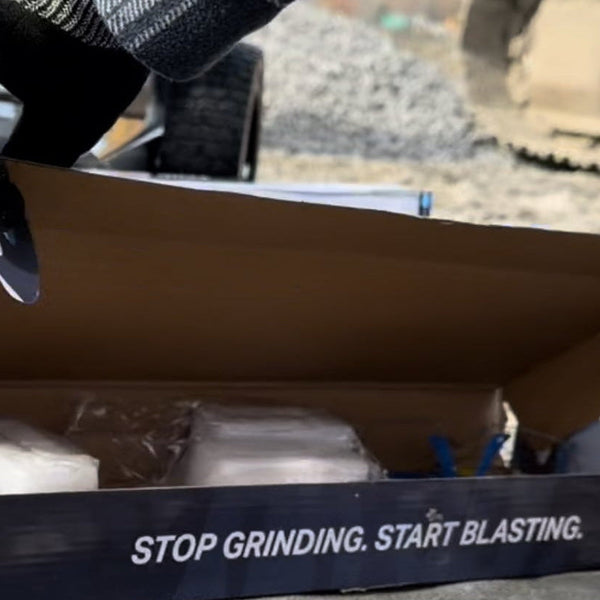
Wet blasting a buggy frame with the Carbide 600.
- 3x the blast radius of a standard nozzle — the impact area is roughly golf-ball-sized instead of pencil-tip-sized
- Wider coverage, fewer passes — the trailer, frame, or hood that would take all day takes a fraction of the passes
- Wider bore, fewer clogs — designed to reduce the clog-related interruptions common with tiny ceramic openings; dry, sifted media still matters
- Short-profile design — drops onto almost any compatible standard pressure-washer gun or wand
- Wet blasting, no compressor — kicks up a fraction of the dust of dry or compressor blasting, so you can run it in a driveway
Applications
Built For Bigger Jobs
It's not built for one type of job — it's built for the whole list. The wider blast pattern helps you cover larger surfaces with fewer passes.

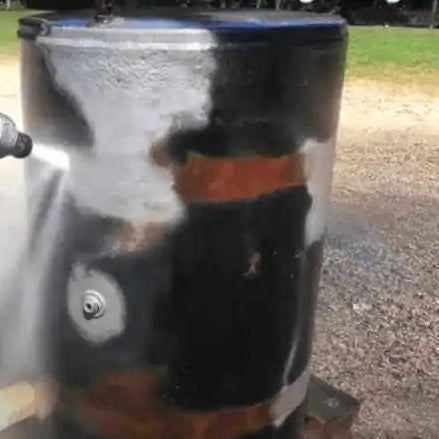
Stripping paint and coating from a large metal surface with the Carbide 600.
- Trailers, gates, hoods, and large metal panels
- Tractors, Jeeps, farm equipment, and machinery
- Frames, undercarriages, and suspension components
- Boats and marine surfaces — the wider pattern is gentler than a tight ceramic nozzle, but you should still reduce the pressure, keep the nozzle moving, and test a small area first on fiberglass
- Concrete and graffiti removal
Customer Projects
Real surfaces. Real restoration work.
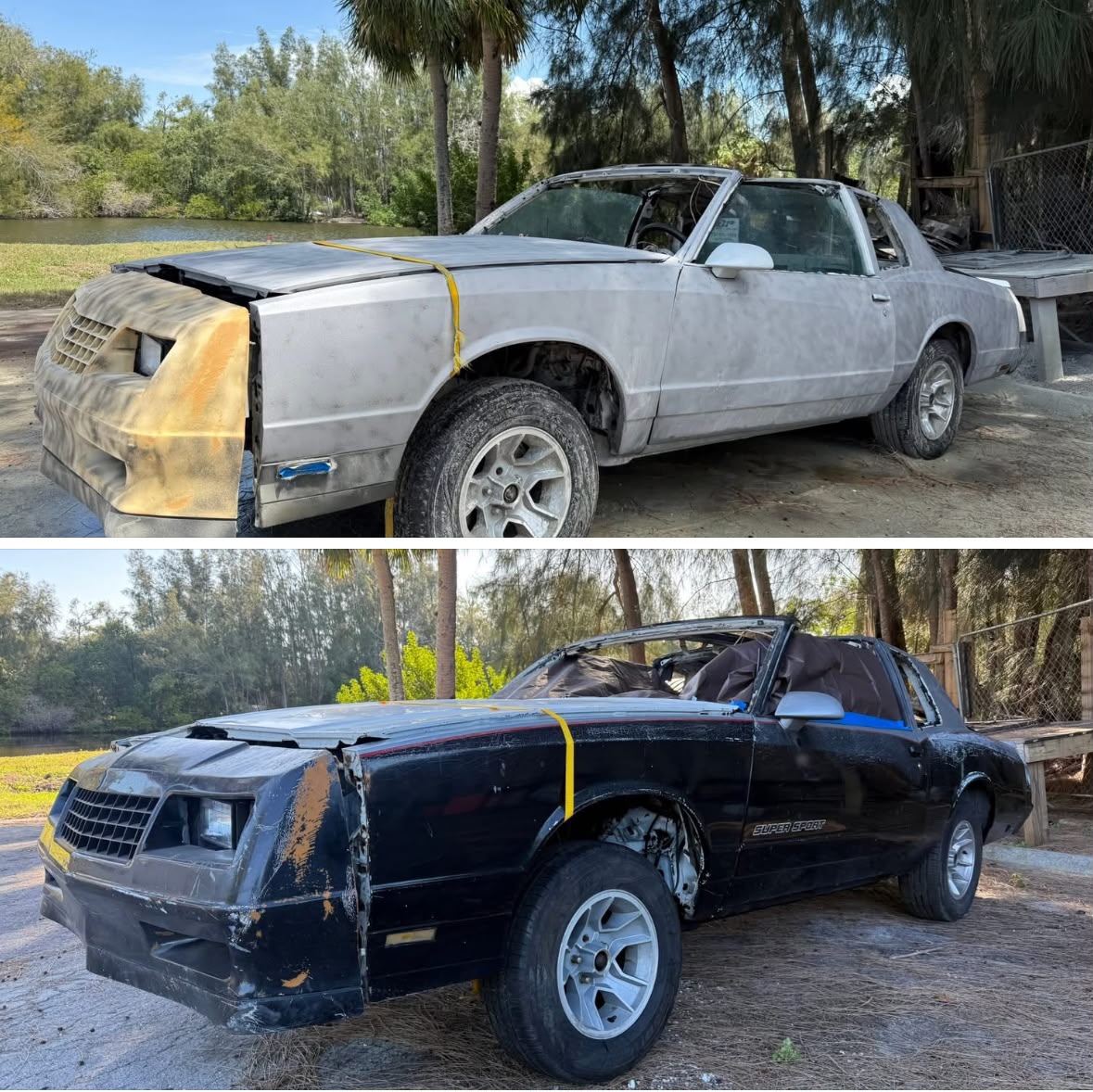
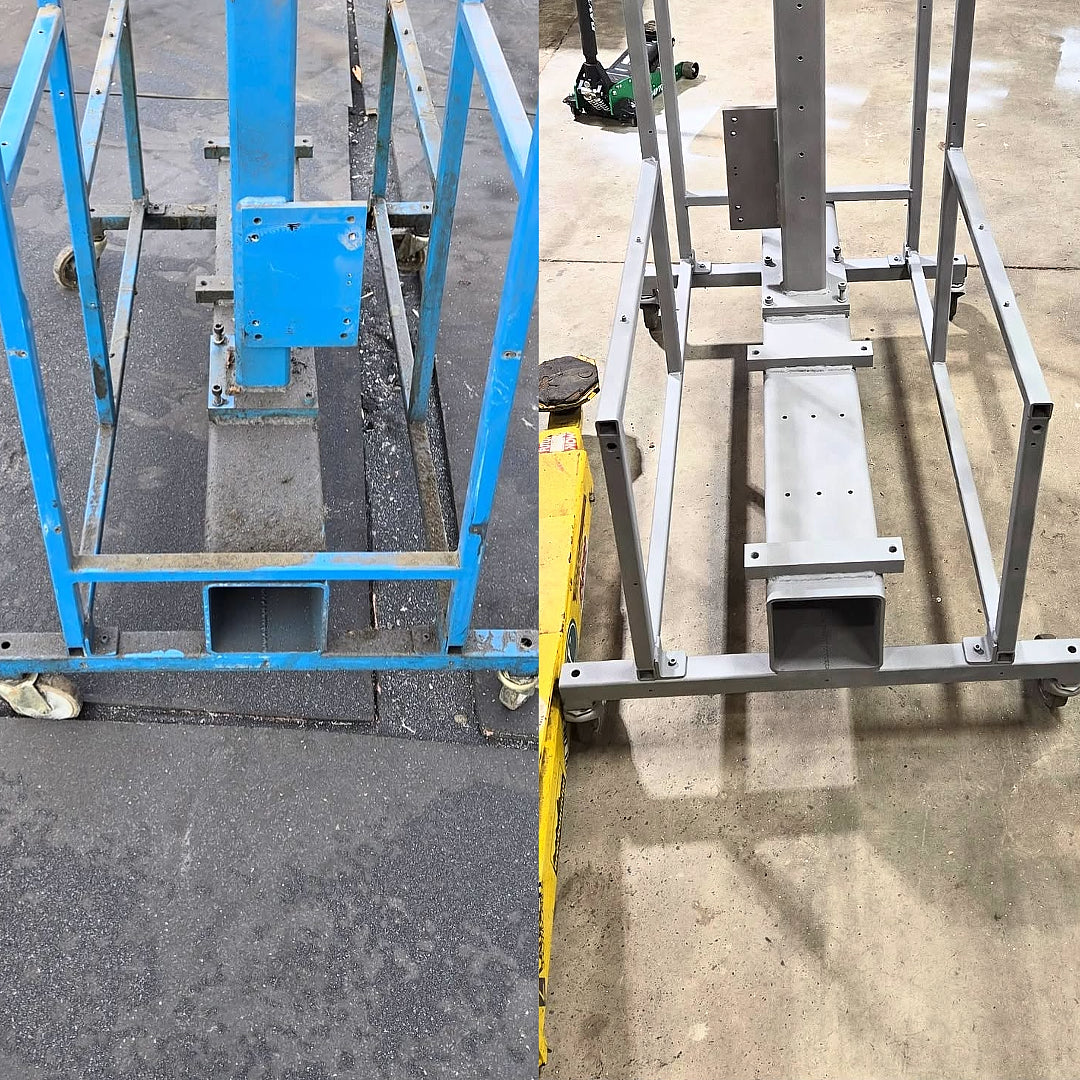
This isn't theoretical. DIYers, restorers, contractors, and independent operators use this exact setup on buggy frames, vehicle bodies, trailers, farm equipment, concrete, and large panels — without a compressor rig and without hiring it out. Results vary based on pressure-washer output, abrasive media, surface condition, and technique.
 Customer project — before and after
 Customer project — before and after
 Customer project — surface stripping result
Choose Your Setup
Pick Your Delivery System
The standard setup uses suction feed — simple, and it works. The gravity-fed upgrade is for people who want total control over exactly how much media they're running: the difference between a rough blast and a genuinely clean one.
Sandpik Suction Feed
IncludedIncluded with the standard setup. A sand pickup with a top air dial — simple and portable for standard jobs. Requires dry, properly sifted media.
- Place the pickup in dry abrasive media
- Open the top air dial
- Start blasting
- Compact and portable
Gravity-Fed Delivery System
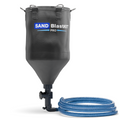
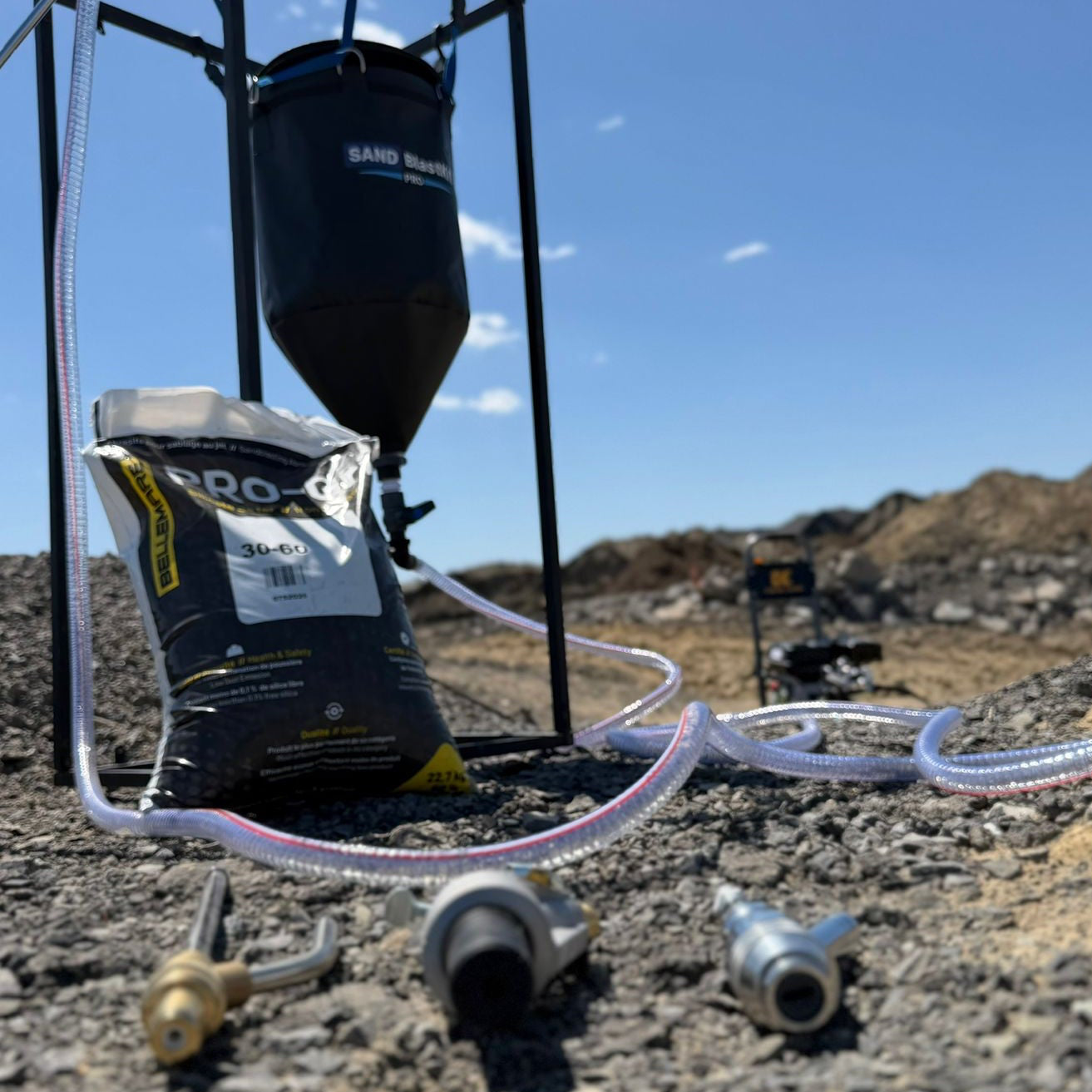
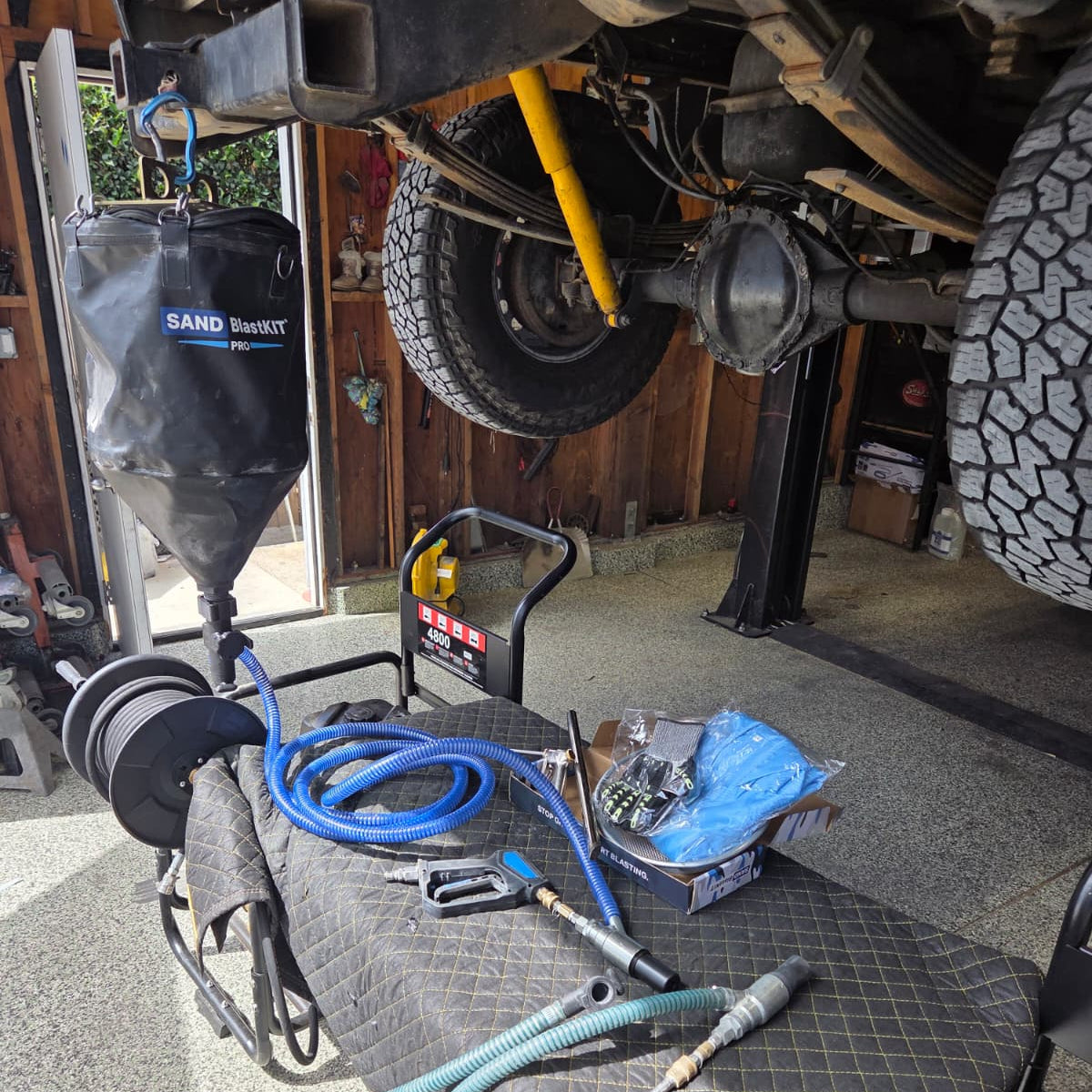
Optional UpgradeMedia drops from a PVC bag through a patent-pending metering sleeve valve. Lower the sleeve and the flow opens — you control exactly how much abrasive enters the system instead of guessing.
- Air and media mix in a chamber before the nozzle
- Smoother, more continuous output instead of surging
- Dial in the flow to reduce wasted abrasive
- Built for longer jobs — set it and keep blasting

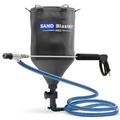
Suction-fed and gravity-fed delivery compared.
Setup
How It Works
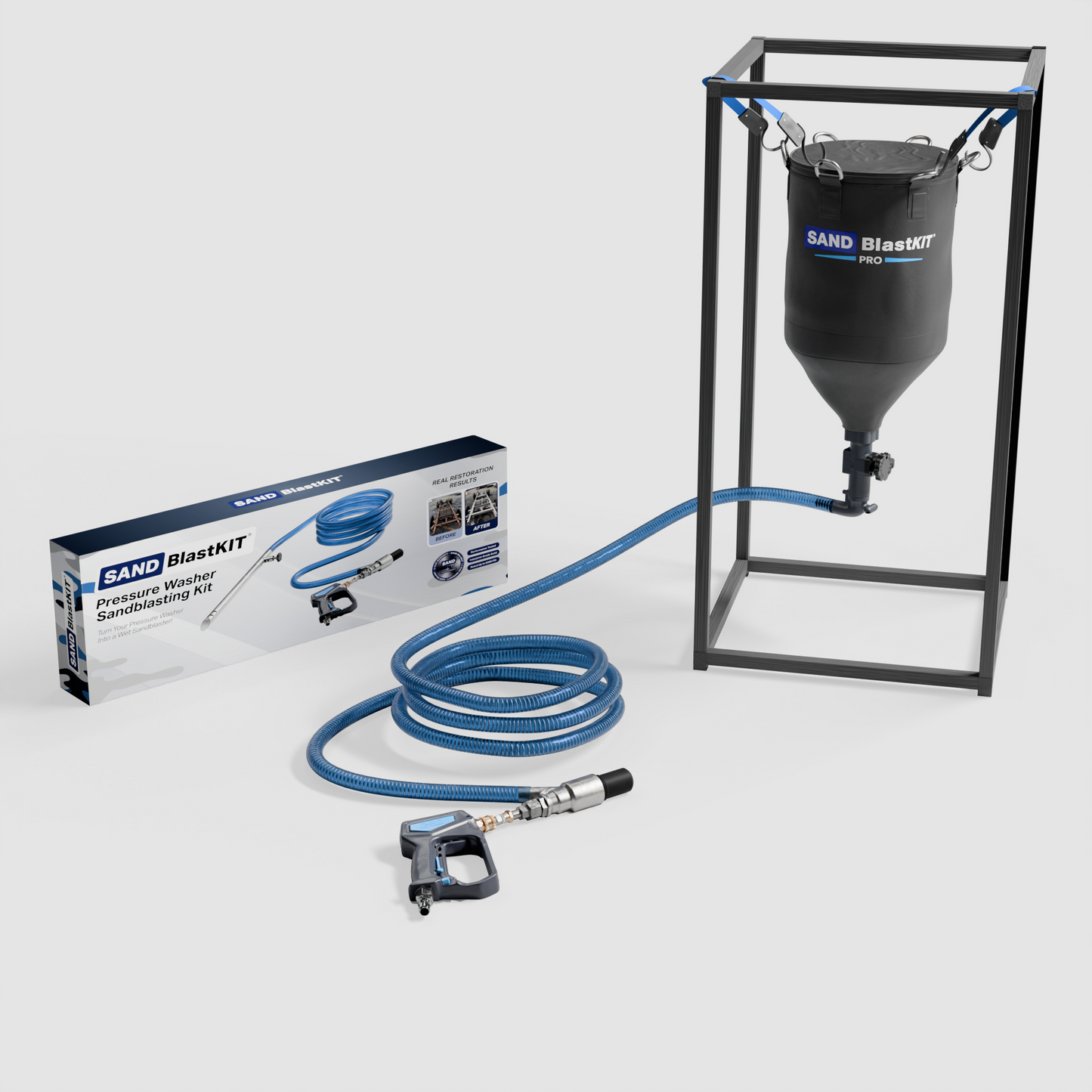
Your pressure washer creates the water force. The delivery system feeds abrasive media into the stream. The Carbide 600 spreads that power across a wider impact zone. No compressor. No trailer full of gear. No complicated shop setup.

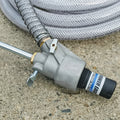
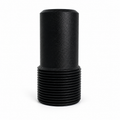
Close-up of the Carbide 600 nozzle assembly and connection.
-
1
Connect the fitting to your pressure-washer wand — works with almost any compatible standard gun or wand
-
2
Secure the Carbide 600 nozzle and O-ring — the two-piece design makes cleaning and swapping simple
-
3
Connect the reinforced media hose to your delivery system
-
4
Set up your media delivery — place the Sandpik in dry media, or connect the optional gravity-fed system and dial in the sleeve valve
-
5
Open the air inlet valve so the media feeds smoothly
-
6
Pull the trigger and begin blasting — that's the entire setup
Media Guide
What Media Should I Use?
The Carbide 600 is the nozzle system. Abrasive media is the consumable that does the cutting — and for the wider bore, 30-grit abrasive is the preferred all-around starting point.
| Media | Best For | Notes |
|---|---|---|
| 30-grit abrasive | All-around rust, paint, and coating removal | The preferred starting point — fast cutting with a smoother finish through the wider bore |
| 20-grit abrasive | Stubborn coatings and heavy buildup | More aggressive, but can wear the nozzle faster |
| Garnet | Steel and automotive restoration work | Choose the grade based on the coating and desired surface finish |
| Coal slag / Black Diamond-style | Heavy rust and demanding industrial surfaces | Aggressive media; follow supplier handling and disposal guidance |
| Crushed glass | Rust, paint, and coating removal | Choose the grade based on the surface and desired profile |
Always keep the media dry. Keeping your abrasive dry solves most feed problems before they start. Wet or clumped media is the most common cause of poor feeding. Sift before use, and keep extra nozzles on hand for big projects.
Compatibility
Will It Work With My Pressure Washer?
The Carbide 600 works on almost any compatible standard pressure washer from 2,500 PSI all the way up to 10,000 PSI. If you were assuming your machine "probably isn't powerful enough," it almost certainly is. Real-world performance also depends on water flow, abrasive media, surface condition, and technique.
- 2,500–10,000 PSI — the approved operating range
- Connects to almost any compatible standard gun or wand — short-profile design, no adapters for most setups
- Use dry, properly sifted abrasive media for reliable feeding
- Test on a small area first — then contact support with your machine's PSI and GPM if you're unsure
In The Box
What’s In The Box
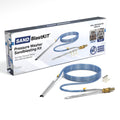
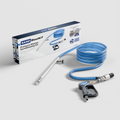
Every kit includes the Carbide 600 nozzle, O-ring, pressure-washer connection fitting, suction-feed sand pickup, reinforced media hose, air inlet/control section, and a setup guide — plus a full video walkthrough if you'd rather watch it than read it. If you have questions about media, PSI, or your specific setup, real people are behind this: fast shipping, replacement nozzles in stock, and support for getting it dialed in.
FAQ
Frequently Asked Questions
How much media do I need for a big job?
Media consumption depends on project size, coating thickness, abrasive type, pressure-washer output, and technique. Rust usually strips fast; rubberized undercoat and heavy paint buildup take more time and media. Plan extra for large or heavily coated surfaces.
What PSI do I need?
The approved range is 2,500–10,000 PSI, which covers almost any compatible standard pressure washer. Performance also depends on water flow, media, and technique — contact support with your machine's PSI and GPM if you're unsure about your setup.
Will it clog?
The wider bore is designed to reduce the frequent clogging associated with tiny ceramic nozzle openings — it keeps moving through coarse media where a small tip would jam. Reliable feeding still depends on dry, properly sifted abrasive and a clean pickup system.
Can I use it on concrete?
Yes — it works for appropriate concrete cleaning, coating removal, and graffiti removal. Test an inconspicuous area first.
Can I use it on boats or fiberglass?
Yes, with care. The wider pattern is gentler than a tight ceramic nozzle that can dig into fiberglass — but still start with reduced pressure and a milder abrasive, keep the nozzle moving, and test an inconspicuous area first.
How long do the nozzles last?
Service life depends on abrasive type, grit, PSI, and usage — more aggressive 20-grit media can increase wear. Carbide is built for high-pressure wet blasting, and replacement nozzles are always in stock, so grab extras for big projects.
Finish More Surface With Fewer Stops
The project that has been sitting there didn’t get easier by waiting. The Carbide 600 puts the right wet-blasting nozzle on the pressure washer you already own.
Join the community
An international community of users share their ideas and journeys with each other online, anywhere.


Works great !! Before and after.. 3100psi pressure washer and Black Diamond media from Tractor Supply


I am definitely happy with the results from blasting my 78' Ford frame.


Bought one 8 months ago and finally tested it on a oil pan with a bag of play sand from home depot I set the sand bucket 3’ above the work peace and it sucked up sand like it was in a hotdog eating contest. I then warmed the pan with propane to remove any moisture and primed it all in one step. Very pleased It worked well.

I completely retract my previous statement that this company is fake. Not only is this product as real as it gets. When I had doubts about a shipping mistake that happened. A real person reached out to answer my concerns and ultimately fixed any issues. They were genuine in their apology and very humble in their approach.

This might save me thousands of dollars in my classic car restoration. Honestly I'll give this a shot.

Heres a real review. I have the 3000psi kit and the 5000psi kit I bought a metal trashcan. I placed a window screen mesh on top to screen the rock from the play sand. ****VERY IMPORTANT STEP**** this prevents frustration with clogged tips. Keep the sand feed hose feeding on top while blasting. Prevents water from getting in the line when you stop spraying. Does it work 100% After you spray it will leave a gold oxidation. To remove this before prepwork you will need to use Ospho or Chemprime. A phosphoric acid which will help etch the metal for the Direct to metal (DTM) primer to positively bond. I love this thing. Yall should send me a new kit as my nozzles just about had it... i pur it through the test with my 1972 Cutlass

I have one you better be careful all your friends will want to borrow or bring stuff to you .....it mad a believer out of me I did a rim off a 1964 f350 never cleaned. 7 minutes it was down to metal

Works great! Used sifted play sand and it stripped the paint and rust right off!

I just finished a 1969 Chevelle door jams doors so forth. Messy but effective.....start the body this week. I changed the sand feed line to a larger size because it kept stopping up with wet sans close to the nosel. Small pebbles were and issue as well. Use as fine sand as you can find. Still had to sift it .The larger sand feed line made a world of difference.

I have used a couple different variants of this. It takes a decent size pressure washer and water supply to run. Also goes through media pretty quickly. That being said it generally leaves a decent finish, also you will need to make sure you have a plan to prevent flash rust after you’re finished.

I first learned about this, from watching YouTube videos about pressure washing with a sandblast attachment, and I spent less than $300 for the pressure washer and this sandblast attachment, bought a 40lb bag of media for less than $10, and a tarp to collect & reuse the media. I blasted my own 1970 GM A-body frame on a pair of plastic sawhorses, on a car trailer, in my back yard, and there was no (harmful) dust to breathe, and no mess or cleanup to worry about. My frame came out like new, I primered & painted it with rattle cans, as a driver vehicle! Best tool I’ve ever owned!

Works really good used it today was surprise how it came out

I purchased one and it works excellent without wasting sand. Although I wished I'd ordered a wet suit with it.

These work great. Only thing I recommend is to filter the cheap sand through a screen to rid it of chunks that plug the suction tube.

This WORKS!!!! I ordered mine and i was amazed at how well it worked without the dust storm and use of a large air compressor.

I feed sand to this unit using a small pressure feed pot. Works much more efficient as the sand is forced into the hose with air pressure. The suction hose does not plug up! Still dustless blasting!!! Great combination for me!