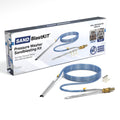
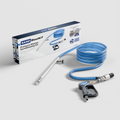
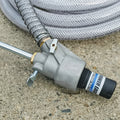
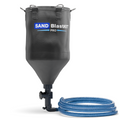
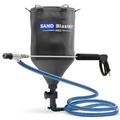
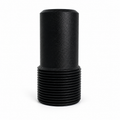


Have not had a chance to use yet , just received now reviewing the unit installing the simple parts.


Everything you need to get started, fast.

Built by makers, backed by a real guarantee.
From light surface prep to heavy rust stripping, these kits give you the pressure, the nozzles, and the control to strip bare metal fast. No guesswork. Just pick your power level and start blasting.
Your results depend on what you're shooting. Coarse media cuts through heavy rust aggressively. Fine media gives you control on delicate surfaces. Get the right grit and your work shows it.
Sand gets everywhere, boxed rails, tight seams, fins, frames. These tools are built to flush it all out fast so you're not chasing grit for hours after the job is done.
Bare metal flashes rust within hours. Don't let the work you just did go to waste. Inhibit, convert, and seal on the same day, before oxidation gets a foothold again.
Bare metal needs protection before rust gets a second chance. Prime it right, coat it strong, and seal the surface for good. This is the step that makes your work last.


Turn Your Pressure Washer Into a Professional Wet Sandblasting System.
The Inductor Tank + Stand is the heavy-duty end of the same system, and it comes with the Carbide 600 included: a rigid roto-molded cone tank that holds up to 250 lbs of media per fill, a metering sleeve valve that keeps the feed steady from the first pound to the last, and a dedicated steel stand built to work the pull with your pressure washer, not against it. Set it. Fill it. Strip anything. Your pressure washer already has the power — even a small one. Gravity drops the media, the sleeve valve meters it, the air inlet pushes it. Your washer only needs a little pull to get a perfect, steady feed. That's why this works on a $150.00 electric washer or a 10,000 PSI commercial rig. No sputtering, no clogs, no refills every ten minutes. Complete system — tank, stand, and nozzle — engineered in the USA.
Couldn't load pickup availability
Buy now, pay later with 0% interest available
The complete heavy-duty gravity-fed sandblasting system — a rigid full-drain cone tank on a purpose-built stand, paired with the Carbide 600 for full frames, full shells, and the jobs you get paid for.
If you’re pricing out a pressure pot just to get more run time out of your rig — stop.
The Inductor Tank + Stand runs the same patent-pending metering sleeve valve and air assist system that made the gravity-fed delivery system work, scaled up and built solid. A rigid roto-molded cone tank sitting on a dedicated steel stand, holding up to 250 lbs of media in a single fill.
The included Carbide 600 completes the system. Its wider mixing chamber and wider carbide bore create a larger impact area, put more media on the surface with every pass, and cover large frames, trailers, panels, and equipment with fewer passes.
Pour it in. Dial it in. Work.
Carbide 600 included · Up to 250 lbs per fill · Rigid full-drain cone · Dedicated heavy-duty stand · Sealed vented lid · 3× the blast radius of a standard nozzle · No compressor required · Engineered in the USA
✓ Up to 250 lbs in one fill. Fifteen gallons of dry media, depending on what you’re running. That’s a full side of a car, or a complete frame, without walking back to the shop. On the BMW 2002 shell, the whole job ran fifteen 90 lb bags — this is how you feed a job that size without your day turning into refills.
✓ Rigid. Nothing flexes, nothing sags, nothing shifts. Roto-molded polyethylene, one solid piece, no seams to split. Load it to the top and the geometry doesn’t change — the tank holds its shape and the valve holds its position from the first pound to the last. Set your flow once and it stays where you set it.
✓ Full-drain 54° cone — it actually empties. This is the same cone design farms use to mix and dump chemical in the field, engineered so nothing settles in a corner and nothing bridges. Media keeps falling straight down into the metering sleeve valve until the tank is genuinely empty. You blast what you paid for instead of leaving a wedge of it stuck in the bottom.
✓ Solid on the ground. The tank drops into a dedicated stand built 4” taller than standard specifically to clear the full-drain cone — so the valve sits at working height and the media hose runs straight out with nothing in its way. A 20” × 20” footprint and a loaded tank sitting low and centered. Shop floor, gravel, dirt, grass. Set it down and it stays put.
✓ Built for the long haul. Polyethylene doesn’t rust, doesn’t rot, and doesn’t care about weather. UV-inhibited for life outdoors. This is equipment built to sit in a yard, get loaded and unloaded a hundred times, and still be the same tank in five years.
✓ Sealed vented lid — 12” threaded. Load it and leave it. Rain, dust, and shop debris stay out, and your media stays dry. Wet media is the number one cause of a slow feed, and a sealed lid is how you never deal with it.
✓ See your level without stopping. Translucent tank with gallon markings molded in. Glance over mid-job and know exactly what you’ve got left, so you top off on your terms instead of finding out at the worst possible moment.
✓ Doesn’t clog. Media falls straight down through the patent-pending metering sleeve valve into the air assist system. No pickup tube to jam. Nothing to shake.
✓ Make it part of the rig. Bolt it to a trailer, a cart, or a shop corner and it becomes a permanent blasting station — a fixed piece of your setup instead of something you assemble at the start of every job.
✓ Carbide 600 included. The system comes with the Carbide 600 nozzle, built for sustained-pressure wet blasting and faster coverage across large surfaces. The nozzle system remains interchangeable, so you can still swap to the Ceramic Series when the job calls for it.
✓ 3× the blast radius of a standard nozzle. The impact area is roughly golf-ball-sized instead of pencil-tip-sized, spreading the pressure across a larger contact area with every pass.
✓ Wider coverage. Fewer passes. The wider carbide bore covers more surface at once, so trailers, frames, hoods, and large panels take fewer passes to strip.
✓ Wider bore. Fewer interruptions. Built to reduce the clog-related interruptions common with small ceramic openings. Dry, properly sifted media still matters.
✓ Built for sustained pressure. The carbide construction is engineered for demanding wet-blasting sessions and an approved operating range of 2,500–10,000 PSI.
✓ Short-profile design. Connects to almost any compatible standard pressure-washer gun or wand, with no adapter required for most setups.
✓ Wet blasting without the compressor rig. The pressure washer creates the water force, the tank delivers the abrasive media, and the Carbide 600 spreads that power across a wider impact zone.
Your pressure washer does the work. No compressor, no pressure pot, no cabinet, no dust containment plan.
The patent-pending metering sleeve valve sits at the bottom of the cone. Quarter turn to open — it locks in and holds. Below it, the air assist system mixes air into the media before it ever reaches the Carbide 600.
The tank feeds abrasive media downward naturally — like an hourglass — so your washer only needs a little pull to maintain a perfect, steady feed. The Carbide 600 then spreads that power across a wider impact zone, putting more media on the surface with every pass.
No sputtering, no clogs, no shaking a bucket.
Full 1972 BMW 2002 shell — roof to rockers, heavy Bondo on a door and two quarter panels. Total downtime across the entire day was five minutes, and that was one fitting change. No clogs. No flow interruptions.
Have a test spot ready. Scrap panel, or just the concrete.
Watch the media hose. If you’ve ever seen sand run through the narrow point of an hourglass — smooth, continuous, no surging — that’s what you want to see. On a sunny day you can see it right through the line.
At the Carbide 600, the stream should still look like water, with the media carried inside it. Judge the rest by feel: the ricochet coming back should be a light ping of fine grains, barely felt.
Too much media and it bounces back like mini ping-pong balls. Not enough and you’re just spraying water. Sit just under “too much.”
Hose moving like a worm? Flow surging? Too much sand, not enough air. Back the meter off one full turn.
Dial to what you’re removing. Light paint needs far less media than heavy Bondo. Don’t waste sand.
Startup: Water first, always. Trigger pulled and water flowing before the valve opens.
Shutdown: Close the meter first, let the hose evacuate, then stop. Reopen the meter to restart.
Two seconds of discipline. It’s what keeps the next pull clean instead of clogged.
The Carbide 600 is the nozzle system. Abrasive media is the consumable that does the cutting — and for the wider bore, 30-grit abrasive is the preferred all-around starting point.
| 30-grit abrasive | All-around rust, paint, and coating removal | The preferred starting point — fast cutting with a smoother finish through the wider bore |
| 20-grit abrasive | Stubborn coatings and heavy buildup | More aggressive, but can wear the nozzle faster |
| Garnet | Steel and automotive restoration work | Choose the grade based on the coating and desired surface finish |
| Coal slag / Black Diamond-style | Heavy rust and demanding industrial surfaces | Aggressive media; follow supplier handling and disposal guidance |
| Crushed glass | Rust, paint, and coating removal | Choose the grade based on the surface and desired profile |
Always keep the media dry. Keeping your abrasive dry solves most feed problems before they start. Wet or clumped media is the most common cause of poor feeding. Sift before use, and keep extra nozzles on hand for big projects.
| System | Inductor Tank + Dedicated Stand + Carbide 600 |
| Capacity | 15 gallons — up to 250 lbs of media, depending on media type |
| Tank | Roto-molded polyethylene, one-piece, translucent with gallon markings |
| Cone | 54° full-drain |
| Tank dimensions | 19” dia. × 27” H |
| Stand dimensions | 20” × 20” × 33” H |
| Stand height | 4” taller than standard, for full-drain cone clearance |
| Lid | 12” threaded vented lid |
| Metering | Patent-pending metering sleeve valve |
| Air | Air assist system |
| Nozzle | Carbide 600 included |
| Nozzle design | Wider carbide bore and wider mixing chamber for a larger impact area and faster surface coverage |
| Blast radius | 3× the blast radius of a standard nozzle |
| Pressure-washer range | 2,500–10,000 PSI |
| Pressure washer | Electric and gas |
| Compressor required | None |
| Media | 30-grit abrasive, crushed glass, garnet, coal slag (Black Diamond-style), and other suitable dry blasting media |
| Outdoor rating | UV-inhibited |
| Engineering | Designed and engineered in the USA |
How much media does it hold?
Fifteen gallons — up to 250 lbs depending on what you’re running. Denser media weighs more per gallon.
Does it include the Carbide 600?
Yes. This is the complete Inductor Tank + Stand + Carbide 600 system. The Carbide 600 nozzle, O-ring, and pressure-washer connection fitting are included.
Will it work with my pressure washer?
The Carbide 600 works with almost any compatible standard electric or gas pressure washer from 2,500–10,000 PSI. Performance also depends on water flow, abrasive media, surface condition, and technique. Contact support with your machine’s PSI and GPM if you’re unsure.
Which should I get — the tank or the bag?
Both run the same patent-pending metering sleeve valve and the same air assist system, so the blasting feels identical. The tank is the heavy-duty end of the line: more capacity per fill, a rigid full-drain cone, a sealed lid, and a build meant to live outdoors and get used hard for years. If you’re running full shells and frames or you want a permanent station on your rig, this is the one.
Do I need to bolt it down?
No. Loaded, it isn’t going anywhere. Bolt it to a trailer or cart if you want the whole rig to travel as one unit.
Can I leave media loaded in it?
Yes — that’s what the vented lid is for. Keep it dry and it’s ready to go next time.
What media should I run?
For the Carbide 600’s wider bore, 30-grit abrasive is the preferred all-around starting point. Dry crushed glass, garnet, and coal slag also run well. Sift reclaimed media through a stainless screen before it goes back in the tank.
Will the Carbide 600 clog?
The wider bore is designed to reduce the frequent clogging associated with small ceramic nozzle openings. Reliable feeding still depends on dry, properly sifted abrasive and a clean delivery system.
Can I use it on concrete?
Yes — it works for appropriate concrete cleaning, coating removal, and graffiti removal. Test an inconspicuous area first.
Can I use it on boats or fiberglass?
Yes, with care. The wider pattern is gentler than a tight ceramic nozzle that can dig into fiberglass, but start with reduced pressure and a milder abrasive, keep the nozzle moving, and test an inconspicuous area first.
How long do nozzles last?
Service life depends on abrasive type, grit, PSI, and usage. More aggressive 20-grit media can increase wear. Carbide is built for high-pressure wet blasting, and replacement nozzles are always in stock, so grab extras for big projects.
Does it come with the stand?
Yes. Tank, stand, and Carbide 600 ship together as one complete system.
30-day money-back guarantee. Real support for setup, media, and pressure-washer questions. Replacement nozzles always in stock.
Complete system: Carbide 600 + Inductor Tank + Stand — everything required for controlled, high-capacity gravity-fed wet blasting in one package.
Add-ons: Sand filter / sifter · Rust converter–inhibitor · AP1 conversion coating · Spare nozzles


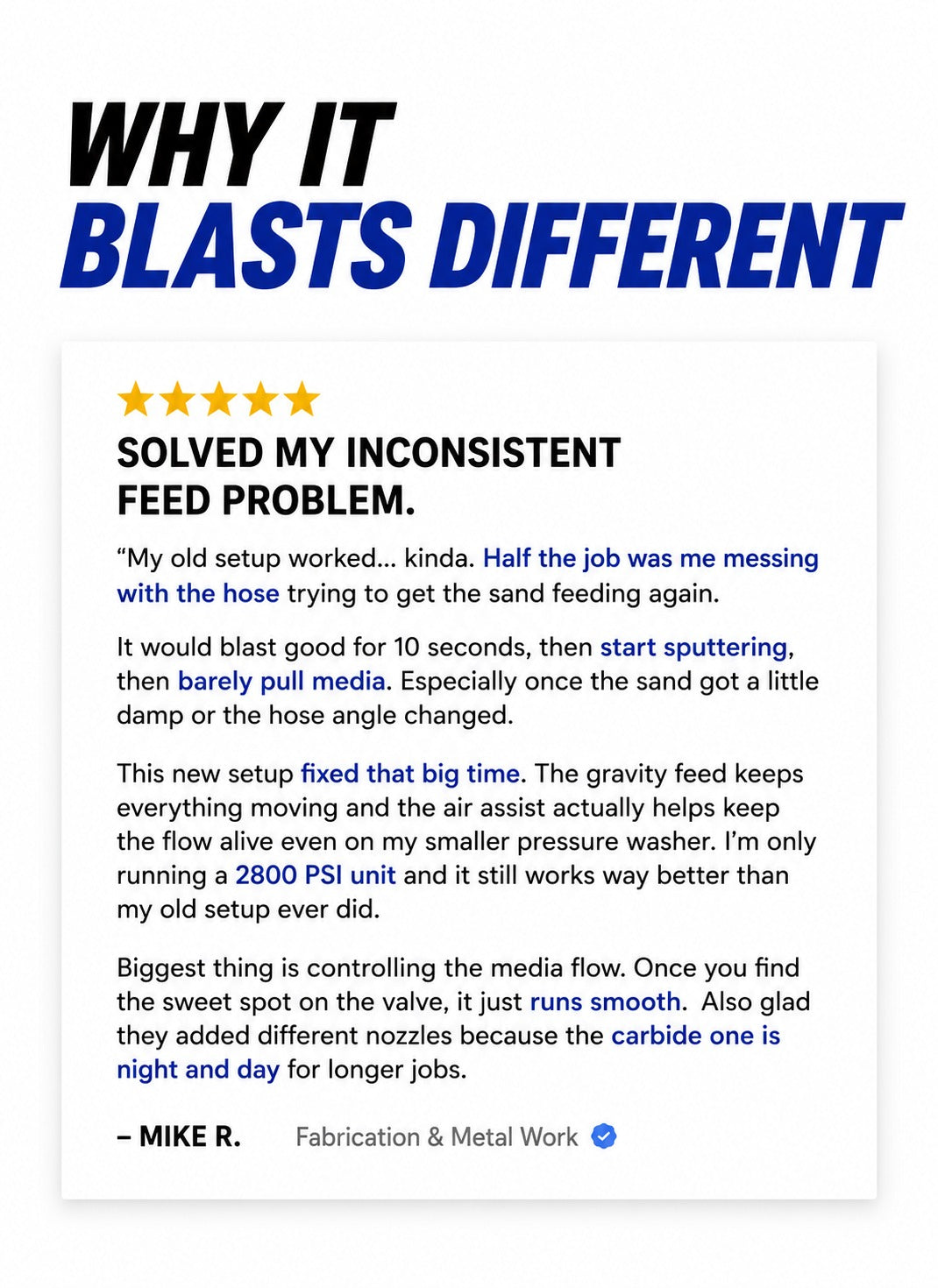
Overall rating: 5.0 / 5 from 1 reviews.
Have not had a chance to use yet , just received now reviewing the unit installing the simple parts.
An international community of users share their ideas and journeys with each other online, anywhere.


Works great !! Before and after.. 3100psi pressure washer and Black Diamond media from Tractor Supply


I am definitely happy with the results from blasting my 78' Ford frame.


Bought one 8 months ago and finally tested it on a oil pan with a bag of play sand from home depot I set the sand bucket 3’ above the work peace and it sucked up sand like it was in a hotdog eating contest. I then warmed the pan with propane to remove any moisture and primed it all in one step. Very pleased It worked well.

I completely retract my previous statement that this company is fake. Not only is this product as real as it gets. When I had doubts about a shipping mistake that happened. A real person reached out to answer my concerns and ultimately fixed any issues. They were genuine in their apology and very humble in their approach.

This might save me thousands of dollars in my classic car restoration. Honestly I'll give this a shot.

Heres a real review. I have the 3000psi kit and the 5000psi kit I bought a metal trashcan. I placed a window screen mesh on top to screen the rock from the play sand. ****VERY IMPORTANT STEP**** this prevents frustration with clogged tips. Keep the sand feed hose feeding on top while blasting. Prevents water from getting in the line when you stop spraying. Does it work 100% After you spray it will leave a gold oxidation. To remove this before prepwork you will need to use Ospho or Chemprime. A phosphoric acid which will help etch the metal for the Direct to metal (DTM) primer to positively bond. I love this thing. Yall should send me a new kit as my nozzles just about had it... i pur it through the test with my 1972 Cutlass

I have one you better be careful all your friends will want to borrow or bring stuff to you .....it mad a believer out of me I did a rim off a 1964 f350 never cleaned. 7 minutes it was down to metal

Works great! Used sifted play sand and it stripped the paint and rust right off!

I just finished a 1969 Chevelle door jams doors so forth. Messy but effective.....start the body this week. I changed the sand feed line to a larger size because it kept stopping up with wet sans close to the nosel. Small pebbles were and issue as well. Use as fine sand as you can find. Still had to sift it .The larger sand feed line made a world of difference.

I have used a couple different variants of this. It takes a decent size pressure washer and water supply to run. Also goes through media pretty quickly. That being said it generally leaves a decent finish, also you will need to make sure you have a plan to prevent flash rust after you’re finished.

I first learned about this, from watching YouTube videos about pressure washing with a sandblast attachment, and I spent less than $300 for the pressure washer and this sandblast attachment, bought a 40lb bag of media for less than $10, and a tarp to collect & reuse the media. I blasted my own 1970 GM A-body frame on a pair of plastic sawhorses, on a car trailer, in my back yard, and there was no (harmful) dust to breathe, and no mess or cleanup to worry about. My frame came out like new, I primered & painted it with rattle cans, as a driver vehicle! Best tool I’ve ever owned!

Works really good used it today was surprise how it came out

I purchased one and it works excellent without wasting sand. Although I wished I'd ordered a wet suit with it.

These work great. Only thing I recommend is to filter the cheap sand through a screen to rid it of chunks that plug the suction tube.

This WORKS!!!! I ordered mine and i was amazed at how well it worked without the dust storm and use of a large air compressor.

I feed sand to this unit using a small pressure feed pot. Works much more efficient as the sand is forced into the hose with air pressure. The suction hose does not plug up! Still dustless blasting!!! Great combination for me!
Everything you need to know about SandBlastKit. Can't find your answer? Contact us directly.

SandBlastKit converts your existing pressure washer into a wet sandblaster. It attaches directly to your wand and uses suction to draw sand from a bucket, mixing it into the water stream so you can blast away rust, paint, and heavy coatings from metal, wood, and concrete. Most standard pressure washers (1,500–4,000 PSI) are compatible.
No special equipment required
It depends on the job. The Starter Kit is perfect for small projects and first-time users. The Do It Right Bundle (our most popular) adds PRO Nozzles, a Face Mask, Sand Sifter, and Rust Inhibitor — covering everything for a complete job. For heavy-duty work like full truck frames, trailers, or farm equipment, the Pro Bundle includes a high-pressure gun and cleanup accessories built for repeated, large-scale use. Not sure? Contact us and we'll point you in the right direction.
Setup order matters: always pull the trigger and get water flowing before placing the suction head into the sand, and when stopping, lift the suction head out first, then release the trigger. Keep the sand hose as upright as possible (around the 12 o'clock position) and raise your sand bucket about 3 feet off the ground for better suction. Using dry, filtered sand is essential, even one damp clump can block the system. This is the single most overlooked step in any pressure washer sandblaster DIY setup.
Use dry, coarse-grade blasting sand — avoid play sand or beach sand as they are too fine, too smooth, or too damp and will clog the system. Different jobs call for different media: coarser grits remove heavy rust and thick coatings, while finer grits are better for lighter prep work or softer surfaces like wood. Always run your sand through the Sand Filter/Sifter before each session to remove rocks, moisture, and debris.
After blasting, bare metal oxidises fast — sometimes within hours. The fix is simple: add Rust Inhibitor to your water feed line (1 oz per gallon). This protects the surface for up to 72 hours, giving you plenty of time to apply primer or paint. If you're not coating right away, wipe the surface dry, blow air into all seams and joints, and store in a dry environment. The Mini Cordless Turbo Jet Blower is great for clearing moisture from tight spots like bolts and frames.
Yes — with the right setup you can recover and reuse 70–80% of your sand. Place the Sandblast Catch Net under your work area to collect spent media. After blasting, rake it out, let it dry in the sun, then run it through the Sand Filter/Sifter again before the next session. Store reclaimed sand in a sealed metal container away from moisture to keep it dry and ready to use.
The two most common causes are wet sand and incorrect hose angle. Check that your sand is completely dry (sift it first), keep the suction hose upright, and make sure the bucket is raised off the ground. If suction is still poor, adjust the black knob on your washer's pump to regulate flow. For stubborn rust or thicker coatings, upgrading to the High-Pressure Washer Gun significantly boosts PSI and gives you interchangeable tips for more targeted control.
We analyzed every Facebook review so you know exactly what to expect -- and what questions to ask before you buy.
The friction is technical clarity -- not trust.
60-70% of comments show real buying intent. They just need one clear answer before they pull the trigger.